
When the most important part of a product or process cannot be easily filmed, conventional video has limitations. This is where 3D animation applications become particularly valuable, allowing organizations to visualize internal mechanisms, manufacturing processes, technical systems, and products that may not yet physically exist. An internal mechanism may be hidden inside a sealed housing, a manufacturing process may involve equipment that is difficult to access, or a product may still exist only as an engineering model.
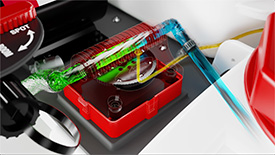
VCM’s 3D animation services provide another option. They can use engineering and design information to show internal components, mechanical movement, product functionality, manufacturing processes, and technical concepts that are difficult to capture with a camera.
The growing use of 3D animation across industries reflects this broader need for technical visualization. Fortune Business Insights estimates the global 3D animation market at $36.27 billion in 2026 and projects it to reach $92.85 billion by 2034, with applications extending across areas such as healthcare, architecture, education, product simulation, and enterprise communication.
For marketing, sales, communications, and training teams, the question is not simply whether 3D animation looks impressive. The more useful question is whether it can make a product, process, or technical idea easier for the intended audience to understand and evaluate.
That matters in B2B environments where a buying decision may involve engineers, procurement teams, executives, clinicians, or other stakeholders with different levels of technical knowledge.
Video continues to play an important role in B2B marketing. LinkedIn’s 2026 Global B2B Marketing Outlook found that 81% of B2B CMOs believe video accelerates sales cycles compared with other formats, while 79% say it accelerates lead conversion. For organizations dealing with technically complex subjects, 3D animation provides a way to use video when conventional filming cannot adequately show the subject.
1. Manufacturing and Industrial Equipment
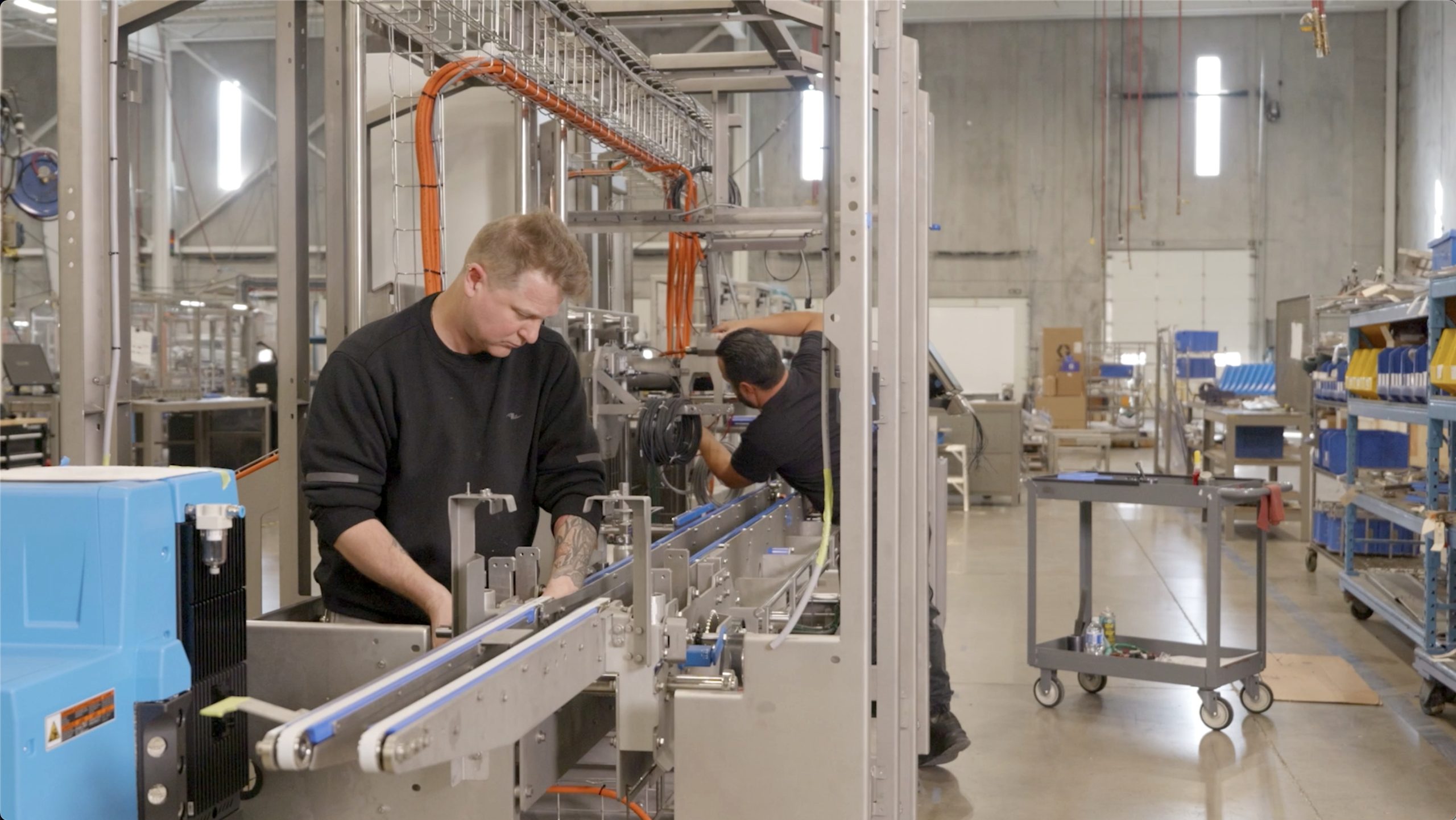
Manufacturing equipment often contains the engineering details that buyers need to understand inside guarded assemblies, enclosed housings, or large production systems.
A camera can show a machine operating, but it may not show how components interact, where material moves through a system, or what happens inside the equipment during operation.
Where 3D animation helps
Industrial 3D animation can be used for:
- Exploded views of mechanical assemblies
- Cutaway views of enclosed equipment
- Automated production line sequences
- Material and product flow
- Component movement and mechanical operation
- Equipment demonstrations for sales and trade shows
For procurement teams and technical evaluators, these visual explanations can make complex equipment easier to evaluate before an in-person demonstration or site visit.
VCM’s industrial animation work includes examples involving automated packaging equipment, robotic cartoners, and manufacturing processes. These types of projects demonstrate where animation can be used to explain machinery that would be difficult to communicate through conventional footage alone.
One example is the robotic cartoner animation VCM produced for Mpac Group, where live filming could not keep pace with the equipment’s speed and precision. The finished animation let Mpac’s team walk prospects through the full loading and sealing cycle in a way no camera could capture on the production floor.
2. Healthcare and Medical Technology
Medical devices create a different visualization challenge. A product may operate inside the human body, contain mechanisms that are too small to capture clearly, or require an explanation of how different components work together.
A conventional product shoot can show the exterior of a device. It cannot show a deployment mechanism inside the body or demonstrate the movement of a component at a microscopic scale.
Where 3D animation helps
Animation can illustrate:
- Device mechanisms
- Surgical procedures
- Internal anatomy
- Implant placement
- Drug delivery systems
- Device interaction with tissue
- Product functionality for clinical education
Accuracy is particularly important in this environment. Clinicians, engineers, and regulatory stakeholders can quickly identify when a technical sequence does not reflect how a device actually operates.
The production therefore needs to balance technical accuracy with clear communication for non-specialist audiences such as purchasing teams, administrators, or other decision-makers.
3. Engineering and Technical Services
Engineering firms often have no shortage of technical information. The challenge is presenting that information in a way that clients, prospects, and non-technical stakeholders can understand.
Engineering drawings, specifications, CAD files, and technical documentation can communicate precise information to specialists, but they are not always effective sales or presentation tools.
Where 3D animation helps
A 3D visualization can turn engineering information into a visual explanation of:
- Equipment operation
- Mechanical systems
- Structural components
- Fluid movement
- Technical processes
- System integration
- Product development concepts
If existing CAD information is available, it can provide an important starting point for production. VCM can work with common engineering formats, including SolidWorks, AutoCAD, STEP, and IGES, helping preserve the relationship between the source engineering data and the finished visual asset.
The important consideration is not simply whether CAD files exist. The production team also needs to understand which parts of the model actually matter to the intended audience and business objective.
This is the same thinking behind the Noggin animation VCM produced to show how the ground-penetrating radar system adapts across different applications. Rather than explaining the equipment separately for each use case, a single 3D animation lets the manufacturer demonstrate its versatility to multiple audiences from one asset.
4. SaaS, Software and Connected Technology
Software does not have a physical form, which can make complex systems difficult to explain to non-technical audiences.
A screen recording may show what a user sees, but it does not necessarily explain what happens behind the interface. Data flows, connected devices, cloud infrastructure, APIs, and system relationships can remain abstract.
Where 3D animation helps
Animation can visualize:
- Data movement
- Connected devices
- IoT systems
- Cloud and hardware relationships
- Network architecture
- Product integrations
- Complex software concepts
This is particularly useful when a marketing or sales team needs to communicate the value of a technical system to an audience that does not have the time or expertise to work through detailed documentation.
The objective should be to simplify the explanation without misrepresenting how the system works.
5. Product and Hardware Companies
A product does not need to be industrial equipment to benefit from 3D animation.
Consumer electronics, specialized hardware, tools, instruments, and other engineered products often contain important features that cannot be seen from the outside. A new product may also need marketing content before finished units are available.
Where 3D animation helps
A product animation can show the exterior design and then move inside the product to demonstrate:
- Internal components
- Assembly
- Material construction
- Mechanical movement
- Electronics
- Product functionality
- Features that are difficult to demonstrate physically
VCM’s 3D product animation work includes projects involving lighting products, pumps, manufacturing products, and other engineered products.
For product marketing teams, this can also create an asset that is useful beyond the initial launch. The same 3D model can potentially support website content, sales presentations, trade show displays, product demonstrations, and shorter marketing edits.
RAB Design Lighting is one example of this kind of product animation, where a manufactured lighting product is explained visually rather than through a written spec sheet alone.
6. Education and Technical Training
Training becomes more difficult when the subject is expensive, dangerous, inaccessible, or difficult to reproduce.
A university, manufacturer, engineering organization, or corporate training team may need to explain equipment operation or a technical process without placing learners around the actual equipment.
Where 3D animation helps
Animation can demonstrate:
- Equipment operation
- Assembly procedures
- Technical concepts
- Safety procedures
- Maintenance sequences
- Internal mechanisms
- Step-by-step processes
The advantage is control. A sequence can be slowed down, repeated, viewed from different angles, or shown from inside the equipment without requiring the learner to be physically present at the site.
For training teams, this can also provide a consistent explanation that can be reused as part of a broader learning program.
7. Construction, Infrastructure and Built Environments
Construction projects often need to be communicated before the finished environment exists.
Architectural drawings and renderings provide important information, but clients, investors, community stakeholders, and other audiences may still struggle to understand how a project will look and function once completed.
Where 3D animation helps
A 3D sequence can demonstrate:
- Building exteriors and interiors
- Construction stages
- Equipment placement
- Site layouts
- Infrastructure systems
- Movement through a proposed environment
The key is to determine what the audience needs to understand. A presentation for investors may focus on the completed development, while a technical presentation may need to show construction sequencing or infrastructure integration.
The animation should be built around that decision rather than simply creating a visually impressive walkthrough.
8. Government and Municipal Projects
Government and municipal organizations often need to explain technical projects to people who do not work with the underlying engineering or planning information every day.
A transportation project, infrastructure upgrade, public facility, or environmental initiative may involve maps, engineering plans, technical reports, and timelines that are difficult to communicate in a public-facing format.
Where 3D animation helps
Animation can provide visual explanations of:
- Proposed infrastructure
- Transportation systems
- Construction phases
- Environmental changes
- Public facilities
- Technical processes
- Project timelines
For communications teams, the challenge is to make the information accessible without removing the details that stakeholders need to make an informed decision.
9. Safety, Compliance and Industrial Training
Some training scenarios should never be recreated physically.
A confined-space incident, equipment failure, incorrect lockout procedure, or hazardous operating condition can be demonstrated through animation without exposing employees to the actual risk.
Where 3D animation helps
3D animation can demonstrate:
- Correct equipment procedures
- Hazardous conditions
- Safety failures
- Equipment operation
- Lockout and shutdown procedures
- Standard operating procedures
- Emergency scenarios
The benefit is not simply avoiding a dangerous filming situation. The same sequence can be reused for employee onboarding, refresher training, internal communications, and other training applications.
10. Professional and B2B Services
Not every 3D animation project involves machinery.
Professional and technical service firms may need to explain a complex process, proprietary technology, infrastructure system, or service that is difficult to represent through conventional corporate video.
In these cases, animation can work alongside live action rather than replacing it.
For example, a corporate video might introduce the people and organization through interviews and location footage, then use animation to explain the technical process that the audience cannot see.
This combination is particularly useful when a project needs both human credibility and technical visualization.
VCM’s ability to produce animation and live-action video under one roof can reduce the need to coordinate separate production companies when both approaches are required.
What Should You Consider Before Producing a 3D Animation?
The strongest projects begin with the communication objective, not the animation itself.
Before production starts, consider four questions.
What information already exists?
Existing CAD files, engineering drawings, product specifications, photographs, videos, and technical documentation can all influence the production approach.
If accurate CAD data is available, it may provide a more efficient starting point than rebuilding the product from reference images.
Who needs to understand the subject?
An engineer may need detailed information about internal components and operation. A marketing executive may need to understand the product’s commercial value. A customer may only need to understand the feature that differentiates the product.
The same animation does not need to explain everything to everyone.
What decision should the animation support?
Is the goal to help a sales team demonstrate a product? Support a launch? Train employees? Explain a technical proposal? Prepare an audience for a trade show?
Defining this before production affects the level of detail, pacing, camera work, narration, and final deliverables.
Where will the content be used?
A single production may need to support a website, sales presentation, trade show display, training program, social media, or paid campaign.
Planning those applications at the beginning makes it easier to create a master asset that can be adapted rather than producing separate content later.
Choosing the Right 3D Animation Partner
A production partner should understand more than animation software.
For technically complex projects, ask whether the team understands engineering data, can maintain technical accuracy, knows how to communicate with B2B audiences, and can adapt the finished asset for the channels where it will actually be used.
It is also worth asking whether the production company has relevant examples of work. A portfolio of visually attractive animation is useful, but examples involving similar products, equipment, industries, or communication challenges provide stronger evidence of relevant experience.
VCM Interactive brings more than 30 years of production experience to projects involving corporate, industrial, technical, healthcare, educational, and other B2B organizations. Its capabilities include 3D animation, live-action production, post-production, and reusable visual assets that can support sales, marketing, training, and communications.
Frequently Asked Questions
What information is needed to start a 3D animation project?
Existing CAD files, technical drawings, product specifications, reference images, and project objectives are useful starting points. The available information affects the modelling approach, production time, and level of technical detail.
Can 3D animation be created before a product is manufactured?
Yes. When accurate design information is available, animation can visualize a product before a finished physical version is available. This can be useful for product marketing, sales presentations, internal reviews, and pre-launch communications.
How long does a 3D animation project take?
The timeline depends on the number of assets, modelling requirements, animation complexity, final duration, and review process. Projects with usable CAD data may require less modelling work than projects that need assets created from reference material.
Can one 3D animation be used for different marketing channels?
Yes. A master animation can often be adapted into shorter edits, different aspect ratios, presentation content, website assets, trade show content, and social media clips. Planning these applications before production can make the final asset more useful over time.
Making Complex Information Easier to Understand
3D animation is most useful when the information that matters cannot be adequately shown through conventional photography or video.
Whether the challenge involves an internal mechanism, a manufacturing process, a medical device, a technical system, or a product that has not yet been manufactured, the right approach starts with understanding what the audience needs to see and what decision the content needs to support.
For organizations exploring 3D animation applications to explain complex products and processes, VCM Interactive can help determine whether animation, live action, or a combination of both is the right approach for the project.
 Video Productions
 Get Quality Media Duplication